WPiA

Webdesign - UX/UI
Project Overview
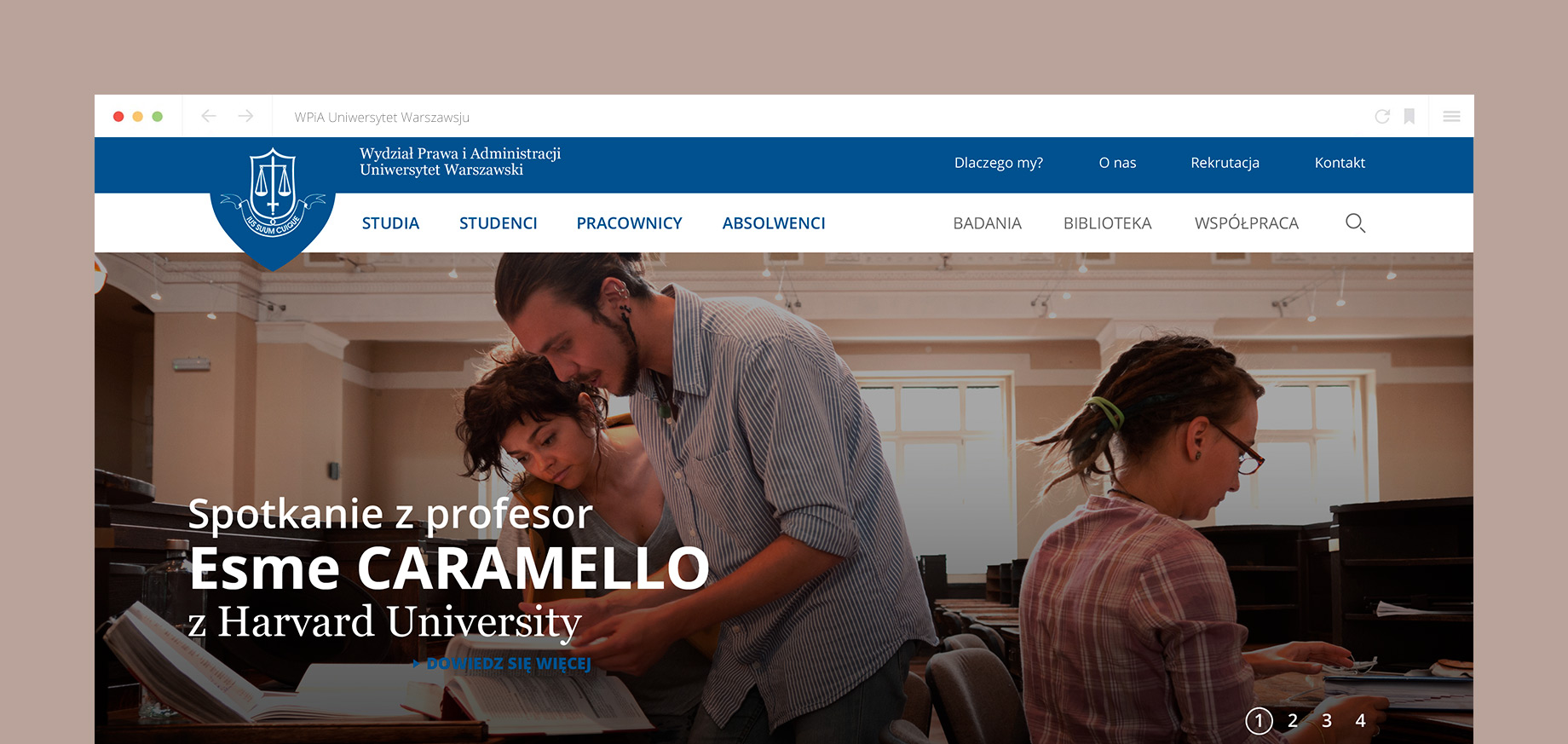
The Faculty of Law and Administration of the University of Warsaw is the pride of Polish higher education and a university with enormous authority on the employee market. We were asked to redesign the entire university website ecosystem, which turned out to be a huge challenge.
My Contributions
My task was to propose a timeless layout for a university with 150 years of traditions that would meet many, at first glance, conflicting requirements of many people involved in the life of the university. The website had to fulfill an administrative and informational role, but also be friendly to young pupils who are just looking for a place where they would like to study - the recruitment project.
Because the WPiA website combines many different topics and study departments,  orientation of information architecture was a crucial element of UX design. Navigation was divided into sections related to stakeholders (students, employees, graduates, etc.) didactic sections (research, library) as well as information about the university and recruitment process and information for future students. All this with keeping in mind most common and crucial user paths who search for specific information on the site and trying to achieve their goals like submitting their candidacy for studying.

WPiA UW
process
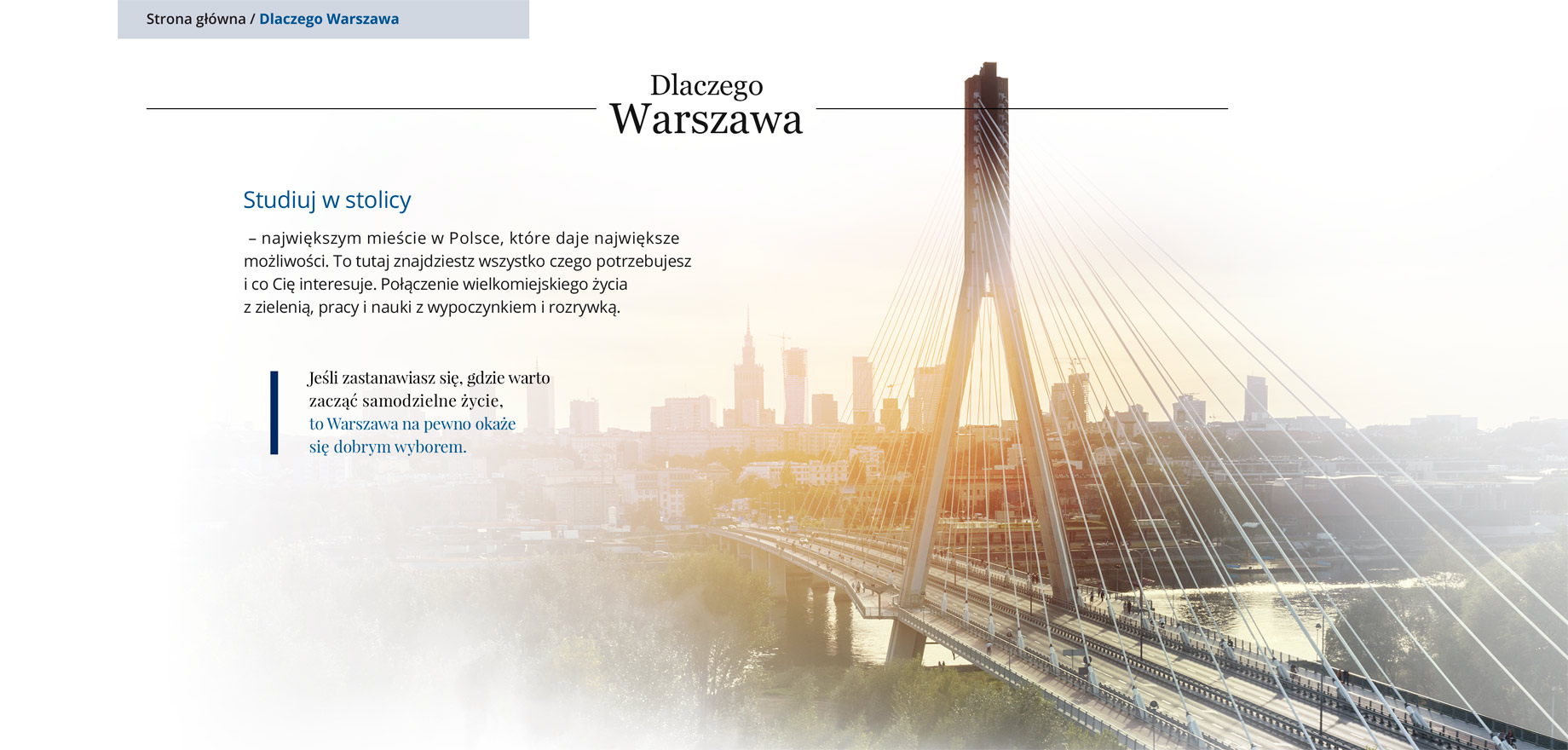
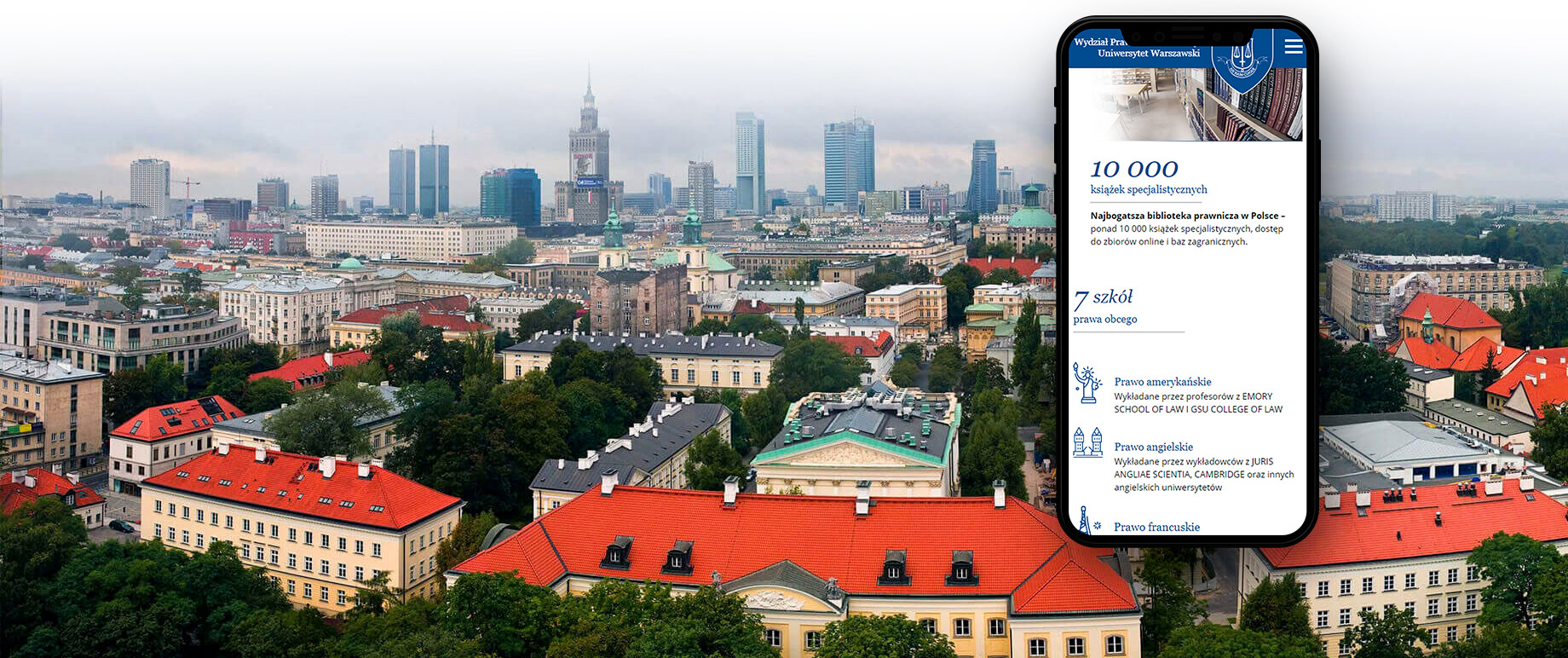
The university Rector also wanted to make the school image more attractive by modern presentation of its undoubted advantages, like its location, within the city of Warsaw. So we've created a dedicated subpage about the benefits of studying in Warsaw and the inheritance of the university itself.
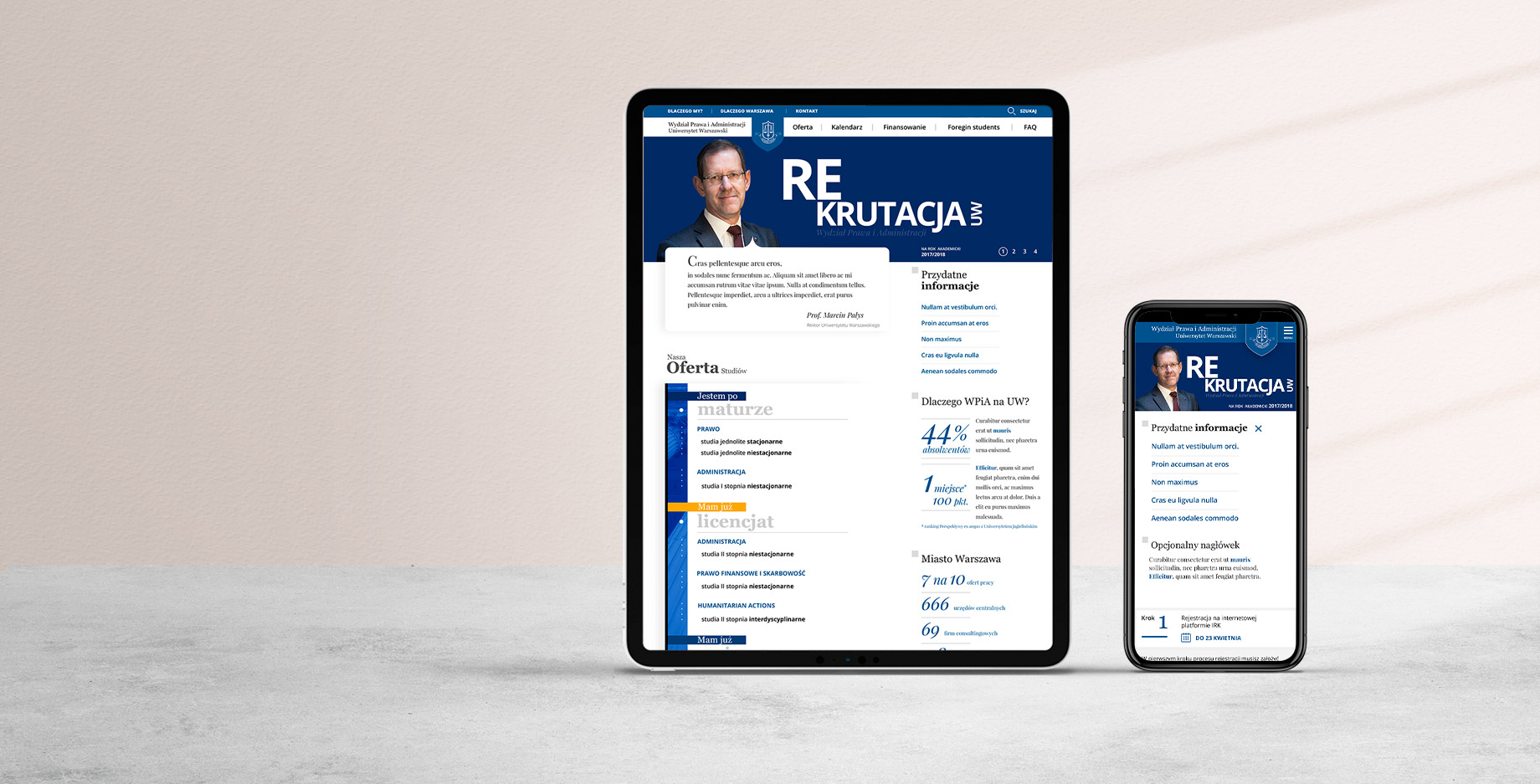
The site has also been designed to mobile devices such as smartphones and tablets. Everything have been redesigned to make navigation and browsing extensive information with no problem.
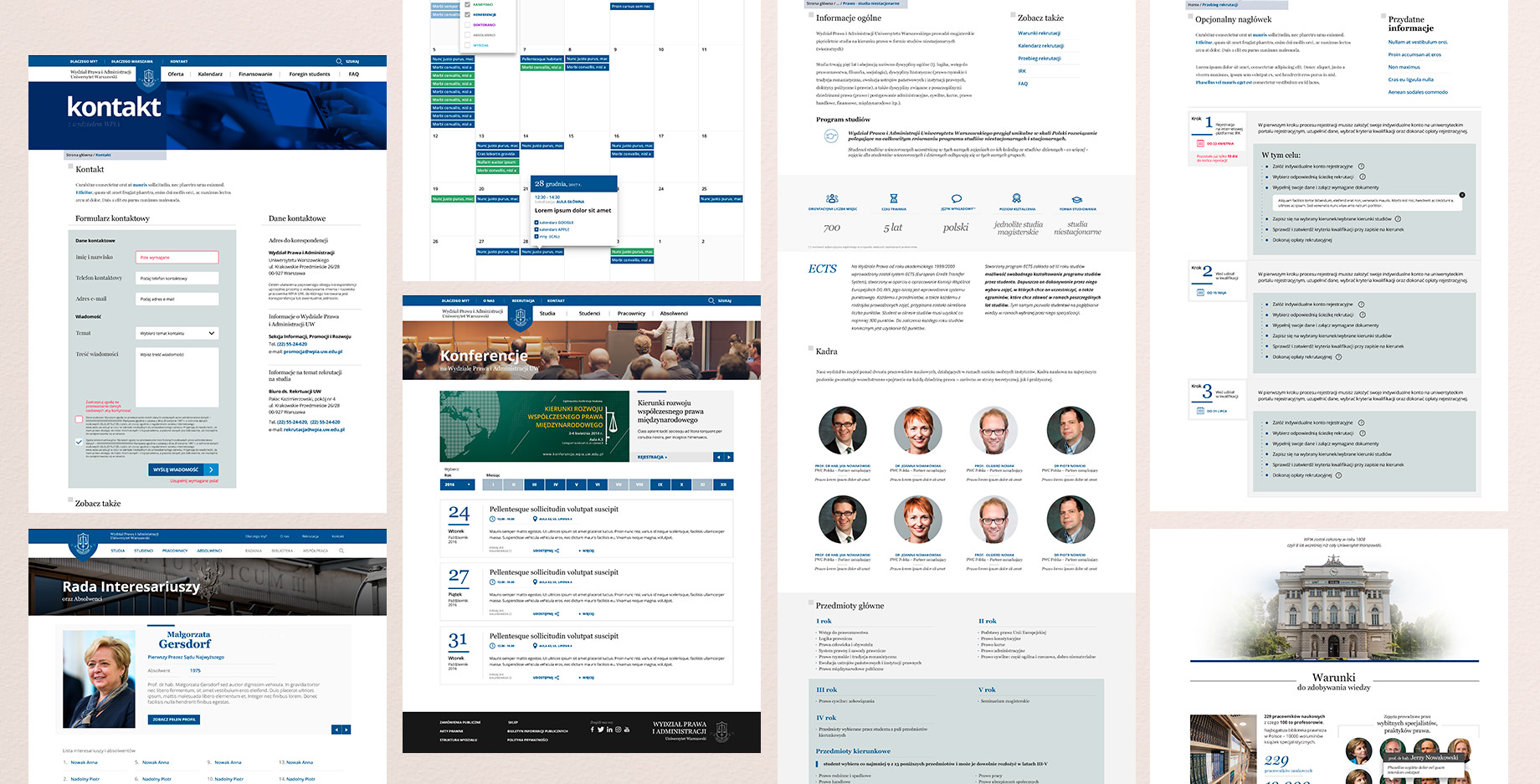
The entire design process took about 6 months. It involved more than 40 independent layouts and subpages.

Website layout and typography should be friendly to everyone, regardless of their origin, age or cultural connotation, that's why we got a lot of inspiration from sites such as Harvard, Yale, Cambridge, which are famous for their friendliness for intercultural students.

Researchers, graduates, well-known officials (eg. Hanna Gronkiewicz-Waltz, Małgorzata Gersdorf) - all these people in different technical advancement had to be able to use the system as efficiently as young students, so the universality of solutions was a great challenge. I decided to follow well-known behavioral patterns and interface design solutions.